
Tango Tanimura's 400 Year Old Tea Whisks
The shogunate's official supplier of tea whisks crafted in Takayama, Japan
In the hills of northwest Nara, there is a village called Takayama. It was here I found myself in June, sitting next to my Sensei (teacher), as we drove the winding road to the home of Mr. Tango Tanimura.
I stared in awe at the beautiful forests passing by. Bamboo grows thick on its slopes. For over 500 years, nearly every whisk (chasen) used in the Japanese tea ceremony has come from this town.
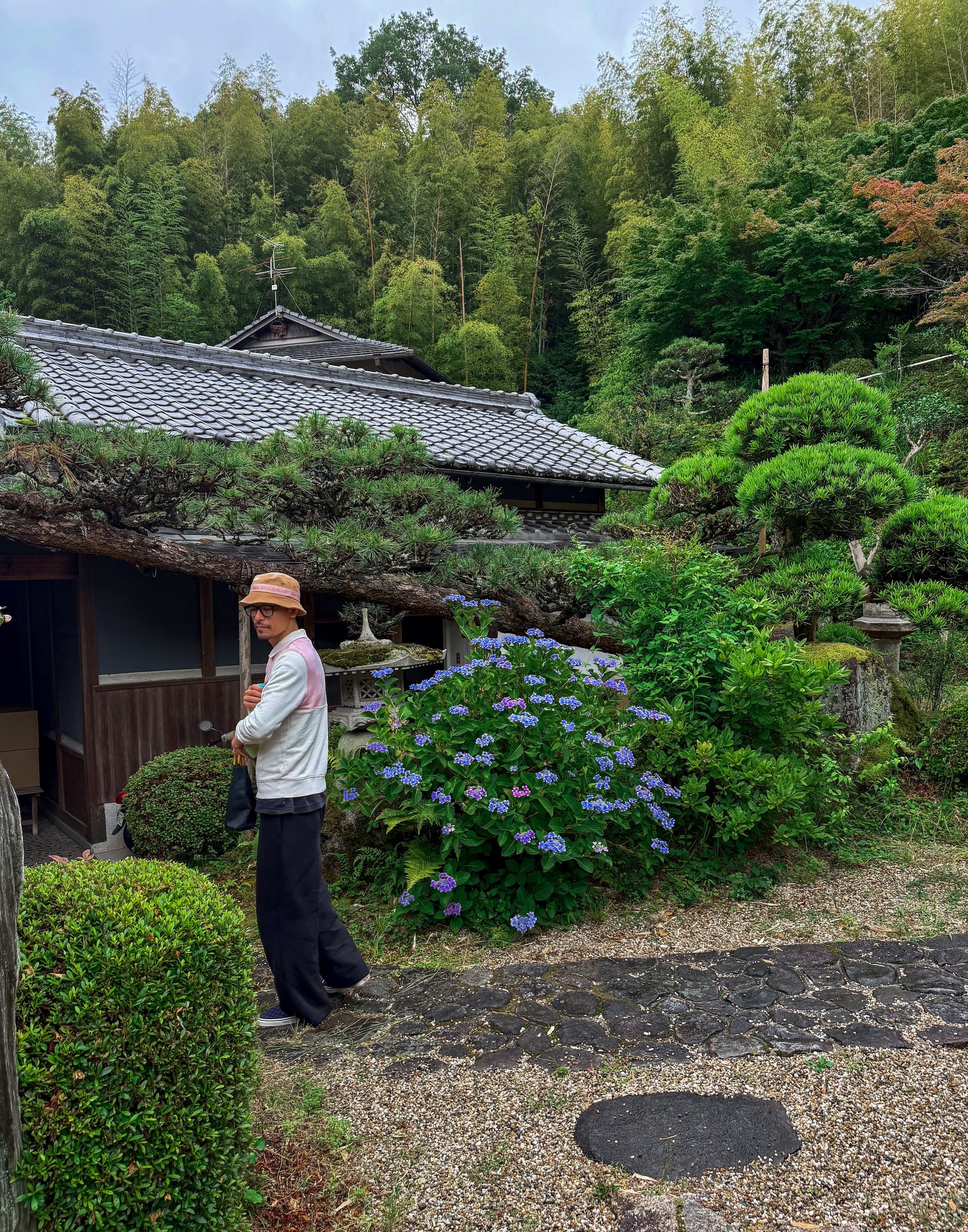
The craft began in the late Muromachi period, when the tea master Murata Jukō, credited with founding wabi-cha, asked for a whisk suited to the ceremony he was shaping. The request went to the second son of the lord of Takayama castle, and what came back became the template for a craft that has barely changed since.
As tea flourished under Toyotomi Hideyoshi and later the Tokugawa shogunate, whisk-making became a protected trade. Thirteen families in Takayama were granted surnames by the shogunate during the Edo period in recognition of their work as official suppliers.
The Tanimura family is one of three Japanese houses that still make chasen today.
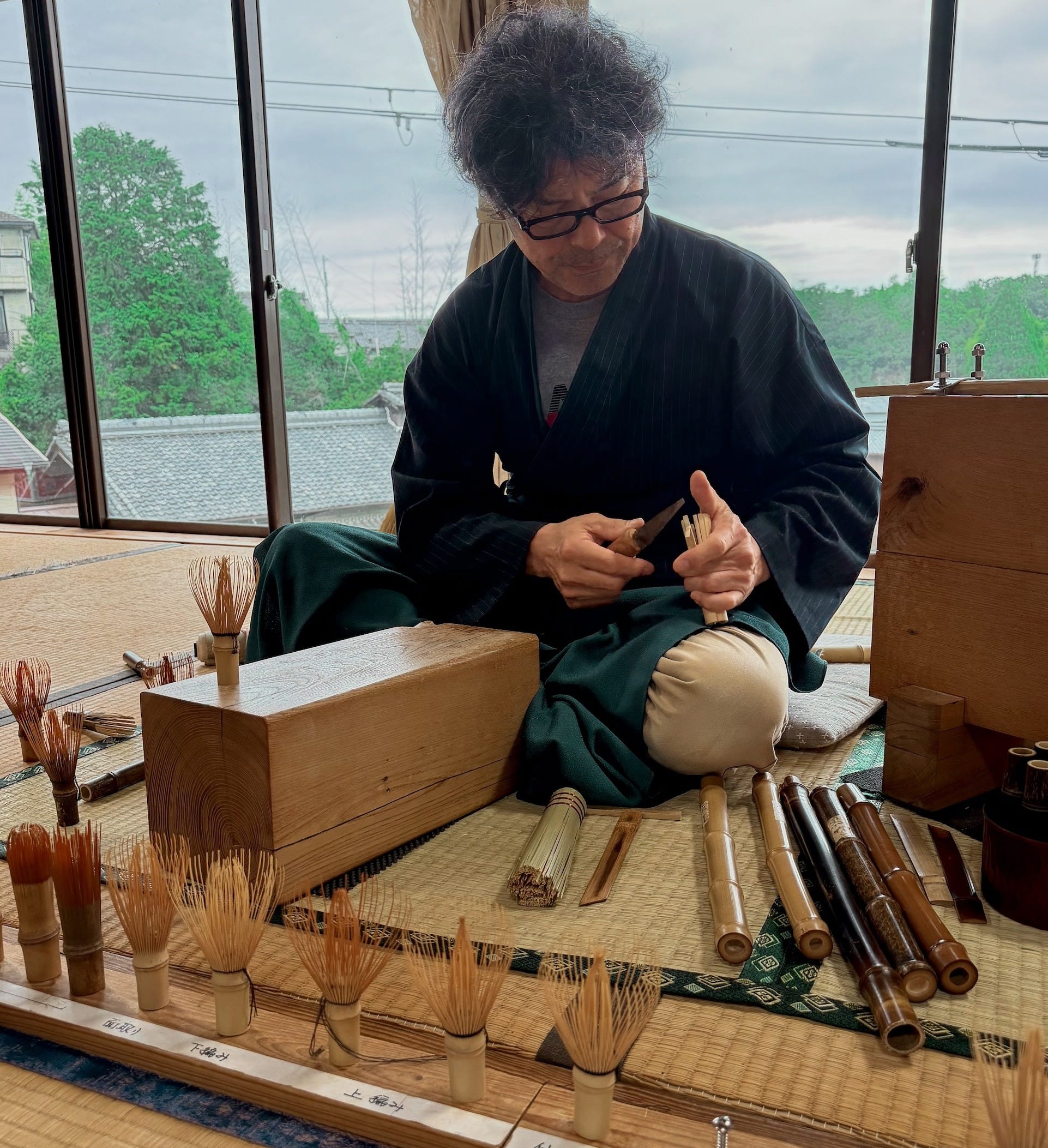
Their hereditary name, Tango, was given by the Tokugawa shogunate itself, and it has passed to the head of the family, generation after generation, for five centuries. Tango Tanimura, born in 1964 in Takayama, entered the family trade at twenty-nine and took the name formally in 2006, becoming the twentieth to carry it.
In 2013, he was invited to contribute a bamboo-themed piece to a Gucci charity project supporting Japanese traditional crafts, and in 2015 he was certified a Traditional Craftsman by Japan’s Ministry of Economy, Trade and Industry. Today his whisks are supplied directly to the grand tea masters of both the Urasenke and Mushakōjisenke schools.
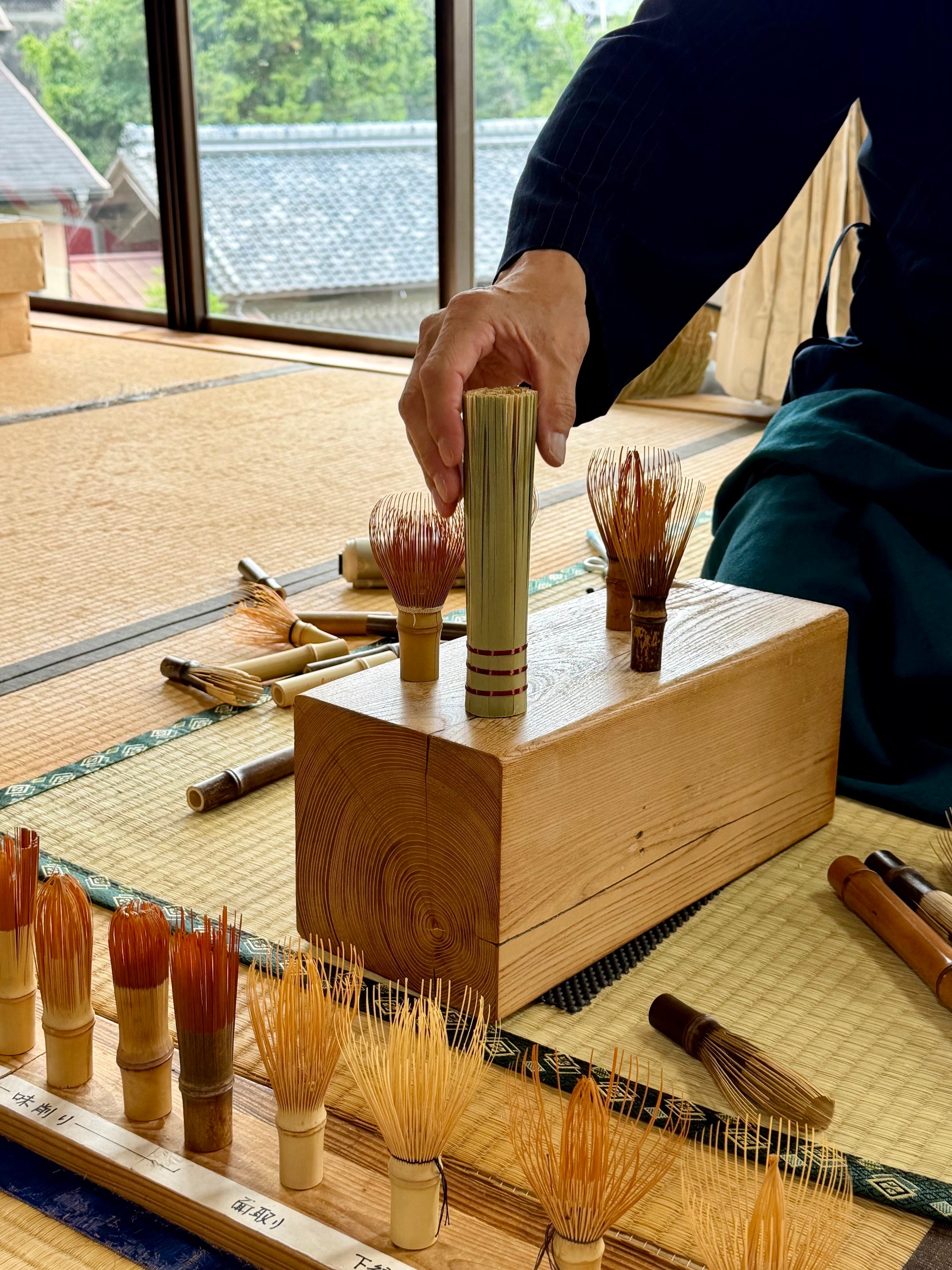
They are in extremely high demand. In fact, Mr. Tanimura shared during our workshop that foreigners regularly turn up at his doorstep at all hours trying to get a hold of the coveted whisks that can only be found here.
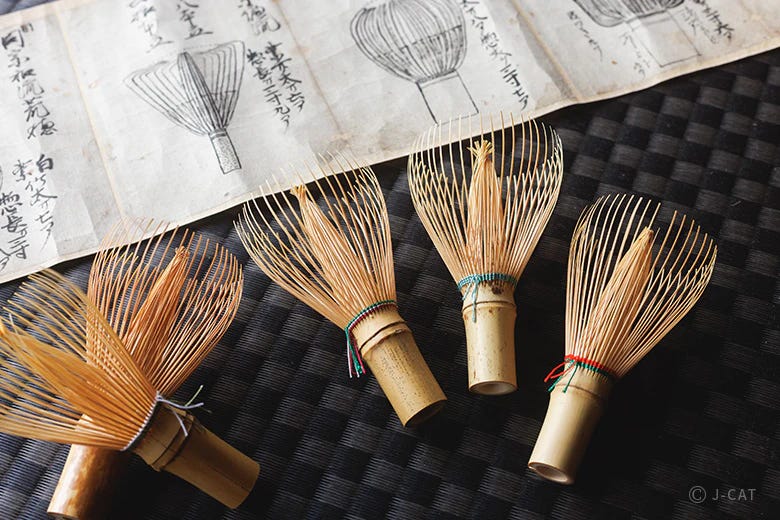
For most of the craft’s history, this knowledge was practiced in the family in secret at night. Until the eighteenth generation, chasen were made after dark, specifically so the technique couldn’t be observed and stolen. Despite the whisk’s importance at the table, it was never recorded alongside the bowl or the scroll in a tea gathering’s formal record. It was around 1960 that the Tanimura family began deliberately opening the craft up, sharing what had been closely guarded for four hundred years.
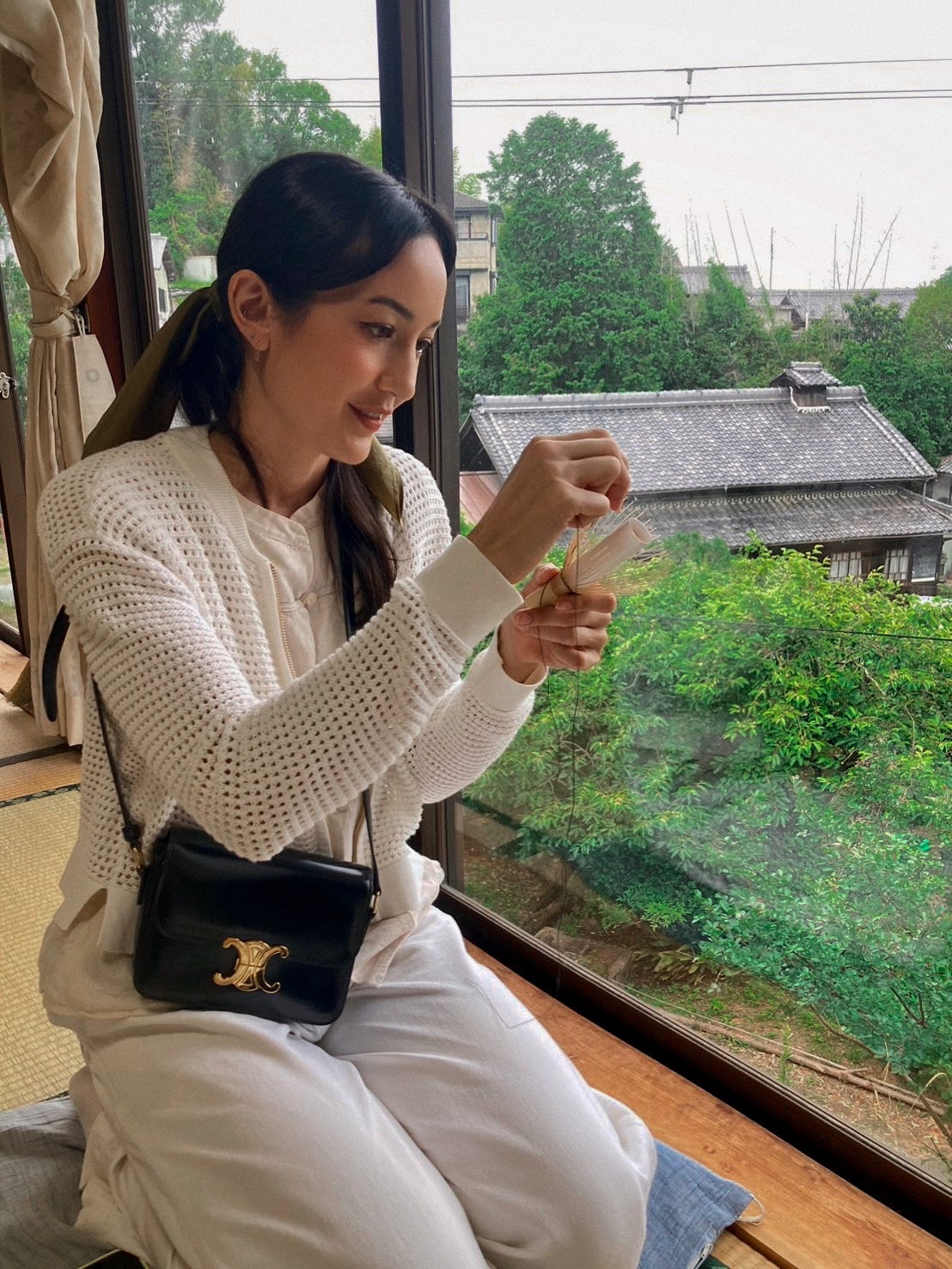
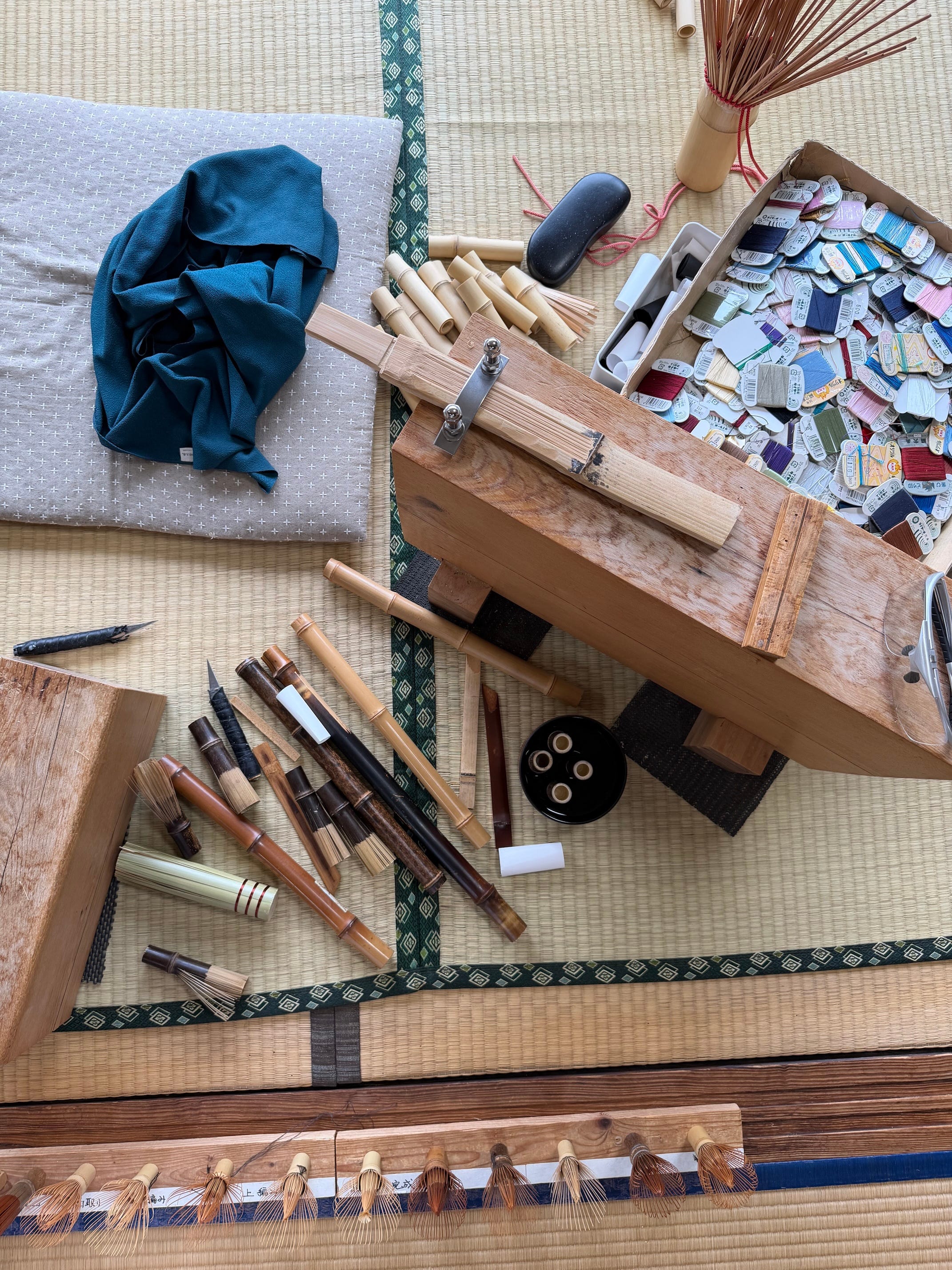
Part of that, is a workshop I joined, where I had the privilege of watching Mr. Tanimura demonstrate the full process, start to finish. The moment that stays with you is ajikezuri, where the tines are shaved paper-thin from base to tip until light passes through them, followed by itokake, the binding of cord between the inner and outer tines that gives the finished whisk its structure and its lift.
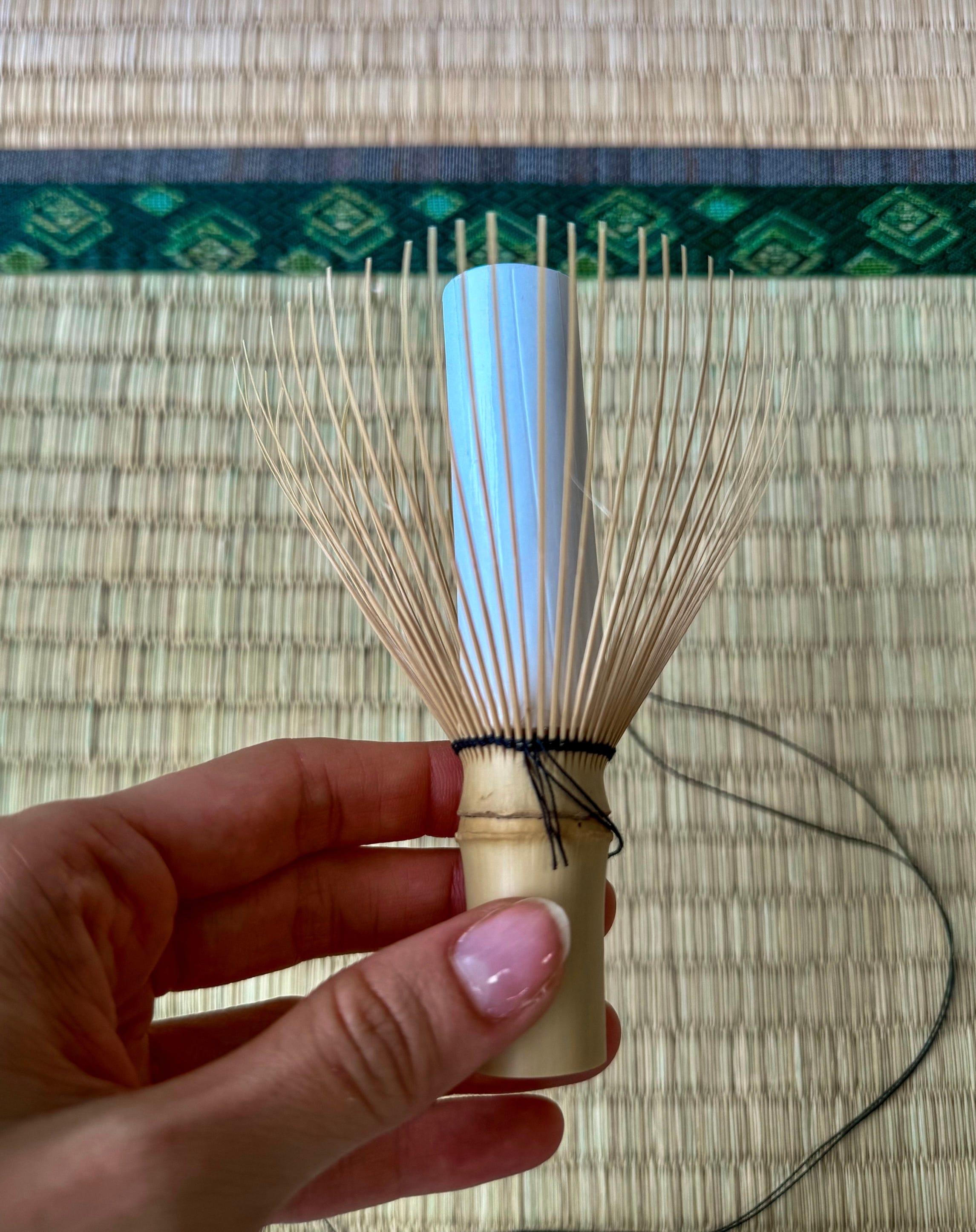
I sat across from him and weaved my own black thread under his eye, delighted to finish first and pass my whisk over for inspection. As he added the finishing touches by shaping the whisk, we chatted about his visit to Oahu in Hawaii for the Urasenke school and how there is actually no tea practitioner for Sekishu-ryu (my tea school) in Hawaii.
His family’s aim has never wavered across twenty generations: a whisk that is durable, effortless to use, and beautiful. There is no doubt looking at the whisks in his workshop that they are beautiful. Even more so, hearing the history of his lineage and watching him craft a chasen so effortlessly with a knife, knowing it would have taken me months (a year?) to do what he did in 30 minutes, was the real magic.
I am delighted to share that Mr. Tanimura graciously offered to collaborate with Tajima Botanica. I grabbed every green whisk box left, holding them in my arms delicately to bring them home to you so you could also enjoy the magic in your tea ritual. Mr. Tanimura’s calligraphy strokes carefully written across each one.
My Sensei stood next to me laughing (I probably looked ridiculous), “isn’t that lucky?”
It’s different. Having a mass produced chasen from a different country versus deeply understanding the origins and craftsmanship of the original chasen from the original family. This is not just a tea tool, but the physical manifestation of an agreement struck between a shogunate and a family hundreds of years ago; a tradition still honored today.
This is why I started my business. To preserve our cultural heritage and connection to our ancestors.
Every chasen we use in tea ceremony at Tajima Botanica tea carries that history forward.
Not a tool. Not even decoration. Craftsmanship as inheritance.
If you'd like to receive these directly in your inbox, sign up here